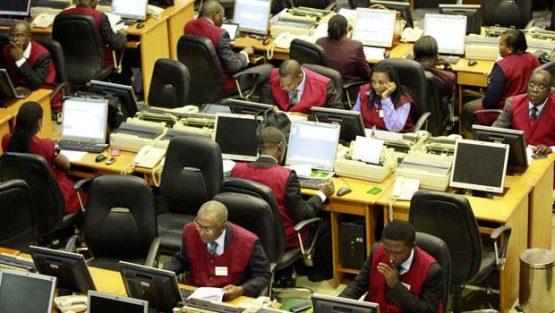
FEYISAYO POPOOLA examines how the losses recorded by investors in the nation’s stock market and other factors are frustrating efforts to reduce unclaimed dividendsThe Nigerian stock market, between 2004 and 2007, witnessed a boom as the economic reforms that began in 2003 led to the write-off of $18bn debt and the creation of pension funds with several billions of naira that were invested in Nigerian securities.The capital market became a haven for profit-taking as stocks were more than tripling in value in less than a year, thus igniting the confidence of investors and lifting the stock market.However, in 2008, the market witnessed a crash as investors lost about N6.96tn within a space of nine months.The market capitalisation of equities listed on the Nigerian Stock Exchange, which opened the year 2008 at N12.6tn, had hit an all-time high of N13.5tn in March but fell to a record low of N6.54tn at the end of the year.Over 60 per cent of the slightly above 300 quoted securities were on constant offer (supply exceeding demand) on a continuous basis, creating illiquidity and trapping shareholders as they could not convert their stocks to cash.This scared new investors away and made existing investors develop apathy for the market.Eleven years after, many investors are still counting their losses and sceptical about bringing their funds to the market.“I was convinced to invest in the stock market back then in 2004. I invested over N3m in shares and then all of it went down the drain during the stock market crash,” a shareholder, Mr Abraham Owoeye, told our correspondent.Owoeye, a business owner who deals in plumbing materials, roofing sheets and cement, is one of many Nigerians who suffered huge losses after the crash.He said, “I just decided not to think about it because at 69, I have realised that there is more to this life. A lot of people committed suicide during that period because some of them borrowed money to buy shares.“As bad as it is, I do not read anything that has to do with numbers or calculation, except my salary payslip. I do not follow market updates and I don’t want to even hear anything about it. There is nothing that can be said or done that will change my mind.”When asked about how and what he intended to do with the dividends of the shares he bought, Owoeye said he couldn’t be bothered to claim the dividends.He said the stock market crash left him distraught and he had yet to get over it.The Chairman, Capital Bancorp Plc, Mr Olutola Mobolurin, said the 2008 market crash caused local investors to develop an aversion for the Nigerian stock market.“Since 2008, Nigerians have developed an aversion for the Nigerian stock market, as many of them have not recovered from their losses; it is almost impossible for them to come back and invest because people lost money. I understand some even committed suicide, while others had a stroke as a result of the shock,” he added. Market performance from 2009 to 2019The stock market, after the 2018 crash, has been unstable, as it struggled to recover from the downturn.The market capitalisation of equities dropped to N7.9tn in 2010 and N6.5tn in 2011.The stock market saw 34 new listings in 2011 valued at N2tn.In 2012, the market capitalisation grew by 37.31 per cent to N8.9tn and closed the year with two new listings.In 2013, the market capitalisation grew to N13.2tn but dropped to N11.5tn in 2014. It dipped further in 2015 to N9.9tn.In 2016, the market extended its two-year losing streak as the market value declined to N9.3tn.The market rallied in 2017 as the market value surged to N13.6tn but fell to N11.7tn in 2018.Causes of the market crashA lecturer at the Department of Banking and Finance, University of Nigeria, Nsukka, Dr Chuke Nwude, in a paper titled, ‘The crash of the Nigerian stock market: What went wrong, the consequences and the panacea,’ said the downturn was caused mainly by fears of contagion effects of the then rampaging global financial crisis.According to him, many investors lost heavily in terms of capital employed, confidence in the market and the capacity of pension funds to meet their obligations as they became due.He said, “The global financial crisis of 2007 to 2009 caused many stock markets of countries to fall. Consequently, the Nigerian capital market was not insulated from this global malignant cancer.“The upward trend in the stock market, which resulted in the market capitalisation peaking at an all-time high of N13.5tn in March 2008 was slowed down by the massive decline in the global economy to less than N4.6tn by the second week of January 2009.“The shrinkage in the foreign economies orchestrated capital flight from the Nigerian capital market as most foreign investors sought to make up for the deficits in their home countries. The pull-out of many foreign investors that already have troubles in their home economies from the Nigerian stock market led to the dumping of shares beyond the ability of domestic investors to contain. In consequence of this, the supply of equities overwhelmed demand, which led to price fall.”Mobolurin, on his part, said the market crashed in 2008 because it was largely oversold and not properly sold.He said stocks were sold to people and they were made to believe that the market would never come down, with some people selling their properties to buy shares.He said brokers and bankers also introduced margin lending and sold shares to different categories of people, including market women, who knew nothing about investment,“People were not warned that should the market drop, they would lose,” Mobolurin added.According to him, because of that experience, a lot of Nigerians have stayed away from the stock market.He said, “We must ensure that we rebuild the confidence of people in the market. Operators and brokers must ensure that they sell to people in a rational manner. They must also consider their understanding and ability to take risks.“The stock market is long-term; people should not put money in it and expect returns in three to six months. Nigerians should also develop local capital formation institutions; else, we will always be at the mercy of foreign investors.”According to Mobolurin, the interest rate is going up in the United States, and this makes it more attractive to invest there.“Portfolio investors are not dedicated to any country; they look for where money can be made; that is why they can leave the Nigerian market at any time,” he added.Dividends in limbo on the back of lossesOver the years, many investors have not claimed their dividends, even as new dividends are issued every year.
Share this content: